

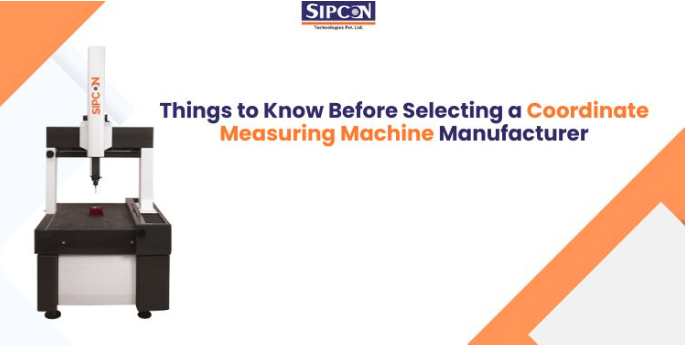
CMM machines play a vital role in ensuring dimensional accuracy, reducing defects, and streamlining production processes. A coordinate measuring machine (CMM) manufacturer not only supplies the hardware but often provides software, service, and technical support that influence the long-term efficiency and reliability of your inspection process. Selecting a manufacturer without a clear understanding of your needs or the capabilities available can lead to costly downtime, inaccurate measurements, or compatibility issues with your existing workflows. Therefore, it is essential to approach this decision with a well-informed perspective, carefully evaluating several important factors.
This article explores the key considerations that organizations should keep in mind before partnering with a coordinate measuring machine manufacturer. From technical specifications and service capabilities to industry standards and technological innovation, we cover the critical points that will help you make a confident choice.
Key Considerations When Choosing a Coordinate Measuring Machine Manufacturer
Choosing a coordinate measuring machine manufacturer involves several factors that can impact product quality, production efficiency, and overall operational success. This section outlines the primary areas to evaluate before finalizing your decision.
Assess Machine Accuracy
One of the foremost aspects to evaluate is the machine’s accuracy and measurement range. Different manufacturing sectors require varying levels of precision, and the coordinate measuring machine must meet or exceed these standards. Understanding the tolerances your applications demand will guide you to a manufacturer who can provide equipment capable of precise measurements across the required dimensions. Additionally, consider the repeatability of the machine, which affects the consistency of measurement over time.
Evaluate Software Integration and Compatibility
A coordinate measuring machine is only as effective as the software that drives it. Software compatibility with your existing CAD/CAM systems, ease of use, and features such as automated reporting and data analysis are essential. When selecting a coordinate measuring machine manufacturer, inquire about the software ecosystems they offer and how these integrate with your production or quality assurance environment. The ability to customize software workflows to match your inspection requirements can significantly enhance efficiency.
Review Service and Technical Support
Post-purchase support is critical to maintaining machine performance and minimizing downtime. A manufacturer with responsive service, regular maintenance programs, and accessible technical assistance can be a valuable partner. Check the availability of local support centers or authorized service providers in your region. This factor is often overlooked but can determine how quickly issues are resolved and how smoothly your operations continue.
Consider Compliance with Industry Standards
Manufacturing industries such as aerospace, automotive, and medical devices have stringent quality standards. It is important to select a coordinate measuring machine manufacturer that complies with relevant certifications and industry-specific standards. For example, ISO 9001 certification or adherence to AS9100 guidelines can indicate a manufacturer’s commitment to quality and process control.
Explore Technological Innovation and Future-Proofing
The field of metrology is rapidly evolving with advances like multi-sensor technology, automation, and integration with Industry 4.0 systems. Choosing a manufacturer that invests in innovation ensures that your coordinate measuring machine will remain relevant and capable of adapting to future production demands. Look for manufacturers who offer scalable solutions and continuous software updates.
Assess Cost Versus Value
While budget constraints are real, selecting a coordinate measuring machine manufacturer based solely on upfront cost can be risky. It is important to evaluate the total cost of ownership, including installation, training, maintenance, and potential upgrades. A higher initial investment in a quality machine with robust support can deliver better long-term value and fewer disruptions.
Importance of Local Expertise and Custom Solutions
Local presence and understanding of your specific industry challenges add significant value. Manufacturers who provide custom solutions tailored to your products and inspection requirements can offer competitive advantages. Collaborating closely during the specification and installation phases helps ensure that the machine integrates seamlessly with your manufacturing process.
Integrating Advanced Instruments from Leading Manufacturers
Incorporating advanced instruments from reputed coordinate measuring machine manufacturers enhances inspection precision and productivity. For instance, companies specializing in sophisticated metrology tools provide instruments designed to meet diverse industrial needs. Among such providers, one notable name offers a broad range of coordinate measuring machines and inspection equipment tailored for demanding applications. Their instruments emphasize reliability, precision, and ease of integration, making them a preferred choice in many quality assurance environments.
Conclusion
In the metrology industry, experienced suppliers play a vital role by offering technical expertise, innovative designs, and reliable customer support. Their instruments often feature advancements that simplify inspection processes, improve measurement accuracy, and boost overall efficiency in manufacturing.
When selecting a coordinate measuring machine, it is important to evaluate performance, software integration, compliance, and after-sales support. A careful choice ensures equipment that strengthens quality control and productivity. Trusted manufacturers like Sipcon Instrument provide solutions that minimize risks, enhance precision, and support long-term industrial goals. Partnering with such companies helps businesses achieve consistent results while building stronger collaboration between manufacturing and quality teams.